
Gas Industry Jobs Australia 2026: What's Happening Now
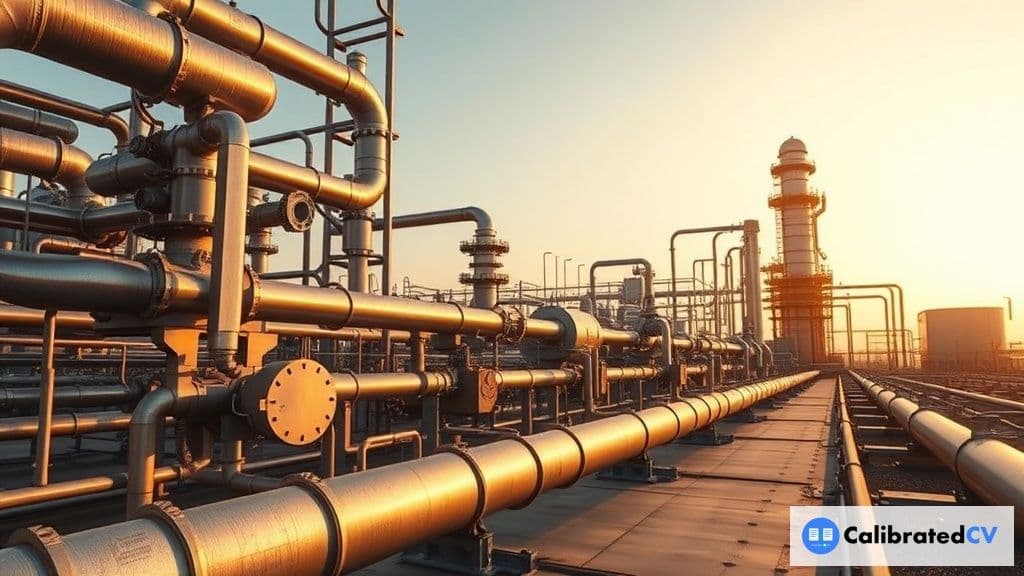
Gas Industry Jobs in Australia 2026: Why Now Is the Time to Get Ready
Most people don't think about gas until they can't get it. But right now, Australia's east coast gas market is front-page news, and it's creating real movement in the jobs market that career-focused professionals shouldn't ignore.
A combination of tight supply forecasts, parliamentary pressure, and a significant refinery fire in Geelong has put the gas industry under a spotlight it hasn't seen in years. If you work in energy, resources, engineering, or trades, this is a moment worth paying close attention to.
What's Actually Going On in the Australian Gas Sector
Supply Is Tight and the ACCC Is Watching
The Australian Competition and Consumer Commission released its Q2 2026 gas inquiry report this month, and the findings are significant. Southern states, including Victoria, New South Wales, South Australia, Tasmania, and the ACT, are expected to rely on surplus gas piped down from Queensland and drawn from storage to meet demand over the coming quarter.
That's not a small thing. It means infrastructure, logistics, and supply chain operations across the east coast are under pressure right now. Where there's pressure in energy systems, there's typically investment, and where there's investment, there are jobs.
The Geelong Refinery Fire Changed the Conversation
The fire at the Geelong refinery in Victoria has added urgency to an already charged political environment. Incidents like this don't just make news cycles. They trigger reviews, safety audits, regulatory responses, and, eventually, rebuilding and operational uplift.
For tradespeople, engineers, safety officers, and project managers, that kind of event typically signals an incoming wave of contract and permanent roles. Remediation, compliance, and infrastructure work don't happen without people on the ground.
Punters Politics and Parliamentary Pressure
The political dimension here matters too. The so-called "Punters Politics" movement has been rattling cages in Canberra, pushing hard on gas companies and demanding accountability on pricing, supply, and community impact. A Senate Select Committee on the Taxation of Gas Resources convened just last week, a clear signal that legislators are tightening their grip on the sector.
Interestingly, ABC News reported on April 21 that Australia's major gas producers have not raised domestic prices the way they did after Russia's invasion of Ukraine in 2022. After years of political pressure and competition regulator oversight, producers appear to be prioritising Australian consumers. That shift in posture, whether strategic or genuine, suggests the industry is trying to reset its social licence.
A sector trying to rehabilitate its reputation tends to hire. It invests in community relations, regulatory compliance, environmental roles, and communication. These aren't just engineering and trade jobs. They span a wide range of disciplines.
Deepwater Projects and Long-Term Growth
Beyond the immediate noise, the structural outlook for Australian gas remains active. Woodside's Scarborough project passed 80% completion by mid-2025, and exploration activity continues to focus on deepwater gas basins with improved recovery technology. The Australia Oil and Gas Market report for 2026 highlights ongoing investment despite the energy transition debate.
The IEEFA has also weighed in on the AEMC's National Gas Rule Amendments 2026, focused on how gas networks operate during the broader transition to renewables. Whatever the long-term energy mix looks like, gas infrastructure will need skilled people to manage, maintain, and eventually transition it. That work doesn't happen overnight.
What This Means for Job Seekers
The gas industry isn't just for petroleum engineers and drillers. A sector under this level of political, regulatory, and operational pressure needs people across functions. Think HSE (Health, Safety and Environment) officers, project coordinators, contract administrators, communications specialists, data analysts, and compliance managers.
Here's how to position yourself well if you're eyeing opportunities in the gas sector right now.
1. Audit Your Transferable Skills First
If you've worked in resources, utilities, construction, or any regulated industry, you likely have more relevant experience than you think. Pull out your most recent resume and map your skills against roles being advertised in the gas and energy sector. Look for language around safety, compliance, project delivery, and stakeholder management.
2. Tailor Every Application to the Role
Generic resumes don't get interviews in competitive sectors. Gas companies, like most large employers, run applications through Applicant Tracking Systems (ATS) before a human ever reads them. If your resume isn't structured and worded to match the job description, it won't make it through.
This is where a tool like CalibratedCV.com becomes genuinely useful. It's built specifically to help job seekers tailor their resumes to individual job listings and optimise them for ATS screening, so the right keywords appear in the right context without making your resume sound robotic.
3. Focus on Safety and Compliance Language
In the wake of the Geelong refinery fire, safety culture will be a top hiring priority across the sector. Even if your background is in a different function, demonstrating familiarity with safety management systems, incident reporting, or risk frameworks will make your application stand out.
4. Watch the Contract Market Closely
A lot of post-incident and project-based work flows through contractors and labour hire. Don't overlook short-term roles as entry points. Many people land permanent positions after proving themselves on contract. Set up job alerts on Seek, LinkedIn, and sector-specific platforms like Energy Jobline.
5. Keep Your LinkedIn Profile Aligned with Your Resume
Recruiters in resources and energy actively headhunt on LinkedIn, especially for niche roles. Make sure your profile headline and summary reflect the types of roles you're targeting. Inconsistencies between your LinkedIn profile and your resume can create doubt. Keep them consistent and keyword-rich.
CalibratedCV Is Already Preparing for This
We're actively building out our data services to support job seekers targeting the Australian gas and energy sector. That means role-specific resume tailoring, better ATS keyword coverage for energy industry job descriptions, and tools that help you put your best application forward in a market that's moving fast.
The gas sector in Australia is in a moment of genuine flux. Supply pressure, political scrutiny, infrastructure incidents, and long-term project pipelines are all converging at once. That combination tends to produce hiring activity across a broader range of roles than most people expect.
If you're thinking about making a move into this space, or you're already in it and want to take the next step, don't wait for the perfect moment. Get your resume ready now.
Head to CalibratedCV.com and start tailoring your resume to the roles that are about to open up.